
How Does a Residential Painting Company Protect Furniture and Floors During Painting?
Preparing your home for a fresh coat of paint brings excitement, but it also raises valid concerns about how your valuable furnishings, delicate flooring, and household decor will be protected. When you hire a professional residential painting company, safeguarding your living space is the foundational step taken before a single paint container is opened. Professional painting teams utilize technical surface protection strategies, commercial drop coverings, engineered masking tapes, and strategic spatial planning to ensure paint stays exclusively on your intended walls.
Understanding how expert painters mitigate risks of overspray, paint drips, airborne sanding dust, and heavy equipment scuffs provides absolute peace of mind. By establishing structured protection protocols, a dedicated residential painting service transforms high-stakes home painting into a controlled, clean, and worry-free property enhancement experience.
|
Protection Target |
Material & Tool Utilized | Functional Safeguard Benefit |
| Hardwood & Tile Floors | Heavyweight Canvas Drop Cloths & Heavy-Duty Surface Paper |
High paint absorption, slip-resistance, impact protection against dropped tools |
|
Plush Carpeting |
Self-Adhesive Polyethylene Carpet Film | Impermeable spill barrier, tight corner seal, zero liquid seepage |
| Upholstered Furniture | 1-Mil to 2-Mil Plastic Sheeting & Stretch Wrap |
Dust containment, full paint drip defense, moisture block |
|
Baseboards & Trim |
Multi-Surface Painter’s Tape & Masking Paper |
Crisp paint edge definition, zero residue, protection against roller overspray |
How does a residential painting company safeguard your property during home preparation?
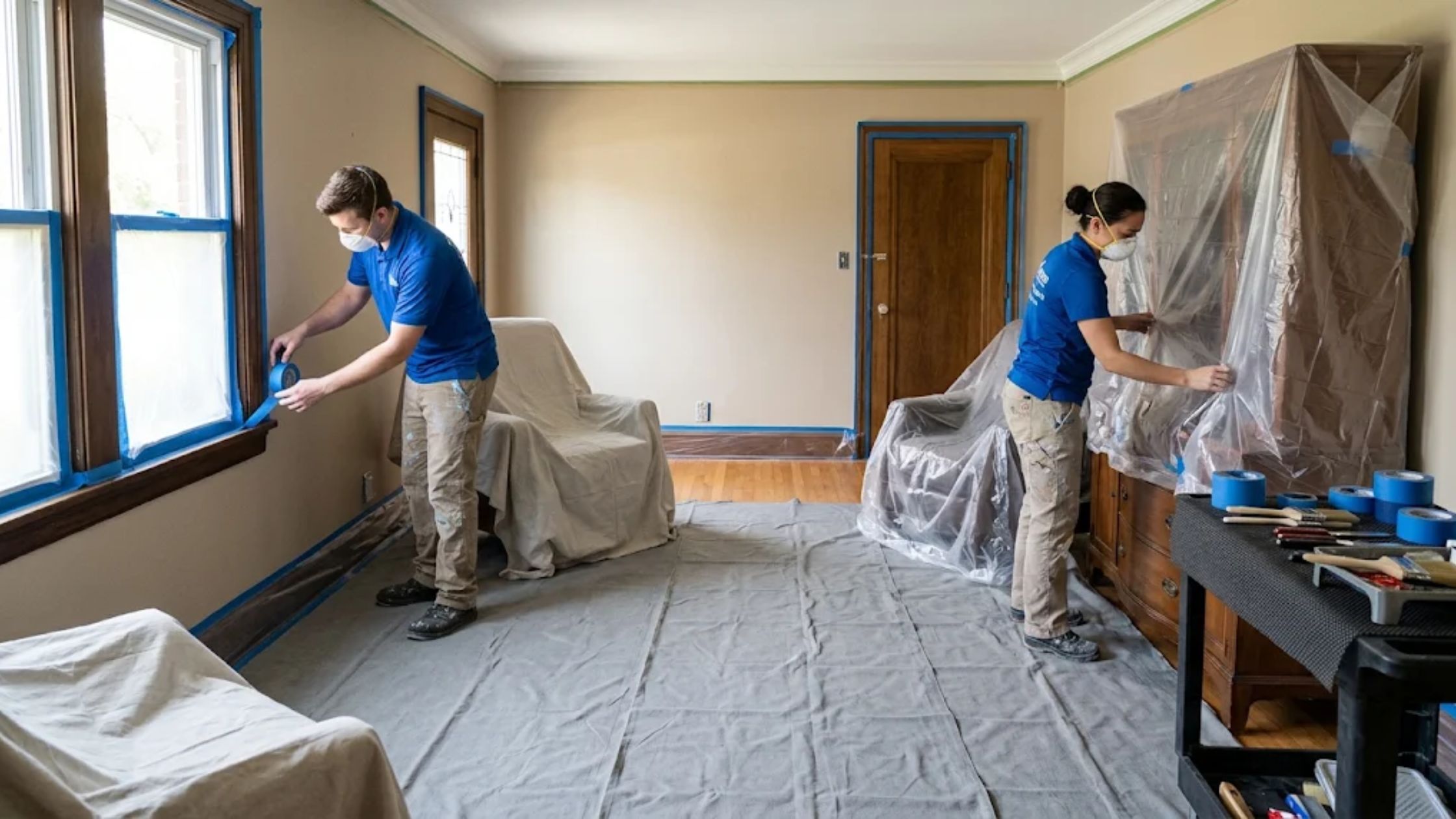
A residential painting company initiates property protection long before applying paint, using engineered physical barriers and systematic spatial consolidation to shield your furniture and floor coverings completely. Protecting your property requires selecting materials matched specifically to your home surface textures, foot traffic intensity, and vulnerability to spills.
Professional technicians execute a multi-layered site preparation procedure designed to eliminate paint transfer risks. Rather than relying on thin, lightweight sheets that shift easily underfoot, skilled crews apply specialized protective materials engineered for durability, liquid absorption, and maximum traction.
Strategic Furniture Consolidation and Plastic Shielding
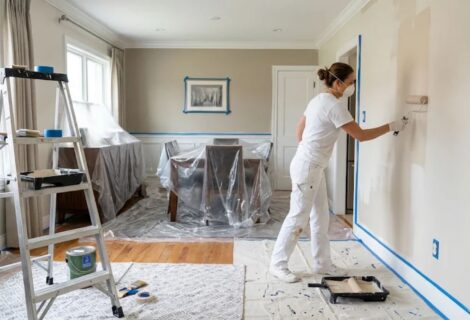
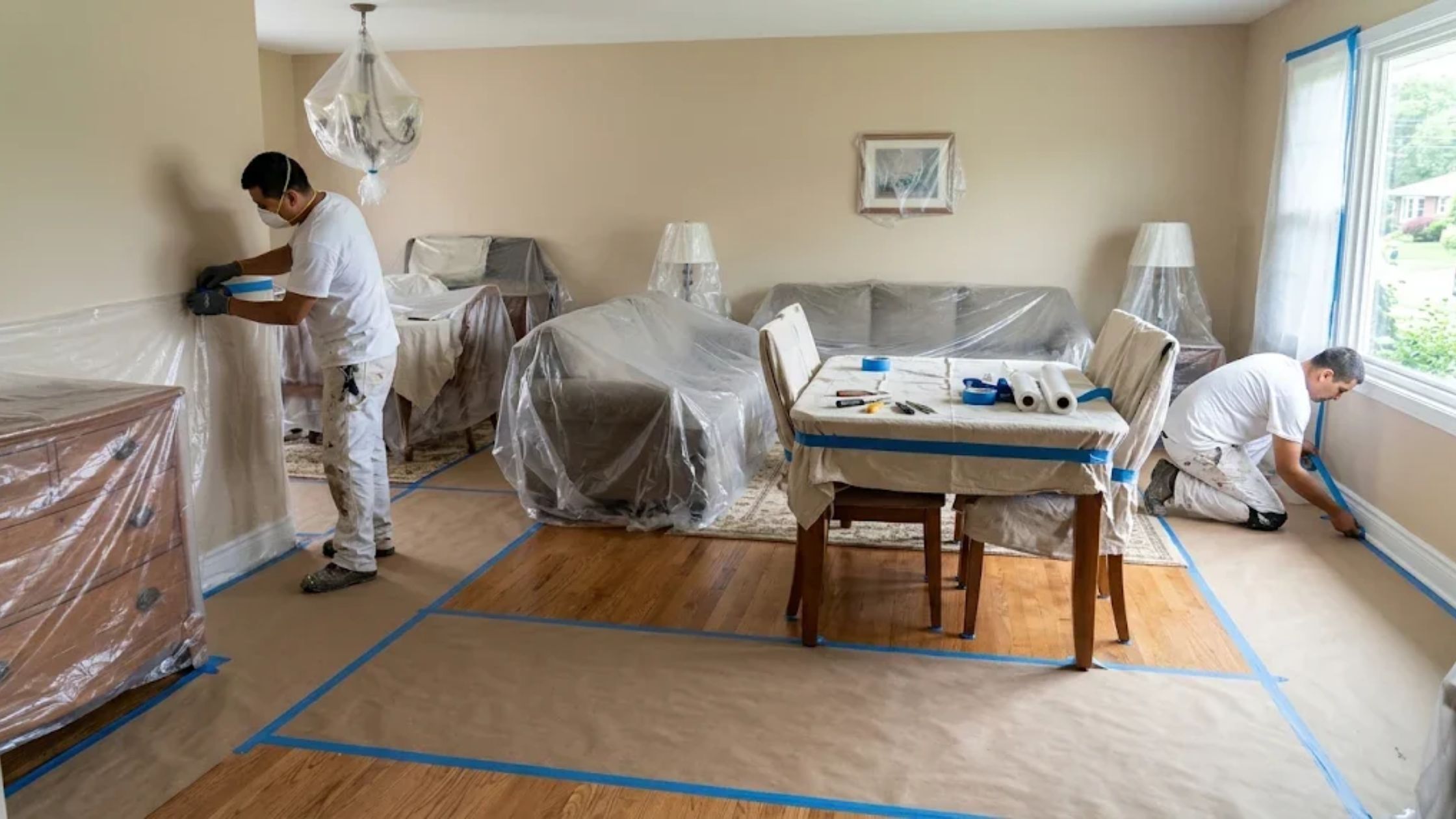
The initial phase of interior site setup requires creating clear work zones along perimeter walls. Technicians carefully move large furniture items, such as sofas, dining tables, dressers, and entertainment units, toward the center of the room.
Once consolidated away from active wall surfaces, items are covered in clean, static-cling plastic sheeting. Plastic wrap seals upholstered surfaces and wooden finishes against floating dust particles generated during joint compound sanding. For delicate heirlooms, leather seating, or antique wood, painters place soft cotton under-layers beneath plastic covers to prevent condensation buildup and friction scratches.
Heavy-Duty Floor Shielding Across Varying Substrates
Different flooring types require specialized protection strategies to prevent liquid penetration, scuffs, and physical impact damage. Professional crews evaluate your flooring materials and select targeted protective layering:
- Hardwood and Engineered Wood: High-traffic wood floors are lined with thick, breathable paper rolls or heavy-duty floor protection boards taped securely along the seams. Heavyweight canvas drop cloths are layered over the top to absorb accidental spills and provide comfortable, slip-free foot traction for workers.
- Wall-to-Wall Carpeting: Flexible carpet protection films featuring low-tack adhesive backings are unrolled edge-to-edge. This creates a puncture-resistant, liquid-proof barrier that clings directly to carpet fibers without shifting or leaving sticky residues upon removal.
- Natural Stone and Tile: Non-porous surfaces like polished marble, granite, or glazed tile are protected using padded felt runners with rubberized anti-slip backing, preventing wet paint from soaking into porous grout lines.
What advanced masking techniques shield fixtures, trim, and architectural details?
Comprehensive home protection extends beyond large floors and bulky furniture pieces. Fine architectural details, hardware, glass surfaces, and electrical fixtures demand precise masking to guarantee clean paint lines and prevent accidental splatters.
Top-tier contractors combine high-grade tapes with precision paper layers to seal non-painted fixtures cleanly. Learning about the dedicated professionals who manage these complex masking operations on our about us team page highlights how technical training and surface chemistry knowledge translate into flawless site safety.
Precision Edging with Engineered Painter’s Tapes
Standard utility tape or low-grade adhesive rolls can bleed paint onto underlying surfaces or strip original wood stains upon removal. Professional painters utilize specialized masking tapes calibrated to specific surface types:
- Delicate Surface Tape: Formulated with low-tack adhesives, this tape is designed for delicate wallpapers, newly cured paint, and smooth decorative veneers.
- Multi-Surface Painter’s Tape: Provides medium adhesion for sealed trim, door casings, window frames, and glass panes, holding crisp lines for extended project durations.
- High-Adhesion Exterior Tape: Ideal for rough brick, stucco, mortar, and exterior trim surfaces where aggressive grip is necessary to block moisture and overspray.
Encapsulation of Electrical Fixtures and Fixed Cabinetry
Unmovable home components like light sconces, chandelier bases, built-in shelving units, and kitchen cabinetry undergo complete surface encapsulation. Technicians remove switch covers and outlet faceplates, storing them safely alongside their original screws.
Exposed electrical boxes are sealed with non-conductive masking paper to prevent wet paint from contacting electrical contact points. Built-in cabinetry and ceiling fans are wrapped in protective polyethylene films, taped down along perimeter seams to block air currents from carrying stray paint mist onto finished wood or glass shades.
How do professional painters control dust containment and manage high-traffic zones?
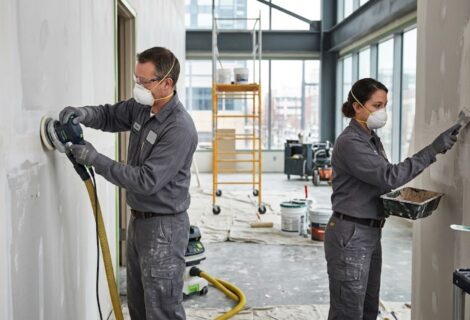
Surface preparation often involves drywall patching, joint compound feathering, and detailed wood sanding, creating fine dust particles that can easily drift through interior living areas. Professional painting crews implement active air isolation and designated traffic pathways to contain dust within active work zones.
Homeowners interested in seeing real-world examples of immaculate workspace protection and pristine finishes can explore our completed projects on our portfolio page.
|
Dust & Traffic Control Measure |
Function & Application Method | Benefit to Home Environment |
| Containment Barriers | Heavy plastic zip-doors mounted over interior doorways |
Keeps sanding dust restricted strictly within active work zones |
|
HEPA Dust Extraction |
Vacuum-assisted power sanders connected directly to tools | Captures up to 99% of airborne particles at the exact point of origin |
| Walkway Floor Runners | Neoprene rubber and canvas runners along entry pathways |
Prevents tracked debris and paint wetness from reaching clean living areas |
|
HVAC Return Masking |
Breathable filter covers installed over air intake vents |
Protects central air ductwork and furnace filters from capturing fine dust |
Dust Containment Barriers and Vacuum Sanding Systems
To isolate work zones from the rest of your living space, painters install temporary plastic containment walls equipped with heavy-duty zipper doors across open archways and hallways. This seals off non-painted rooms, keeping HVAC units from pulling airborne dust into your home’s central ductwork.
Furthermore, modern prep operations utilize vacuum-assisted orbital sanders. These tools suction drywall particles directly into sealed HEPA filtration canisters at the moment of abrasion, preventing fine white dust from settling on your ceilings, light fixtures, or distant furniture.
Pathway Protection Along Entrance and Exit Routes
Painters frequently travel between contractor vehicles, mixing stations, and interior work rooms. Establishing designated transit corridors preserves pristine flooring across your entire home.
Crews line entry hallways, staircases, and heavy-foot-traffic pathways with durable rubber-backed canvas runners. These non-slip pathways remain anchored to floors, capturing dirt, shoe moisture, and accidental paint drips before workers step beyond the primary work zone boundaries.
What steps occur during post-painting removal and final walkthrough inspection?
Property protection finishes only after paint curing completes, protective covers are removed, and a systematic site cleanup is performed. Removing protective barriers requires technical care to avoid damaging fresh wall edges or transferring trapped sanding dust back onto clean floors.
When you invest in complete residential upgrades, partnering with a trusted team like Wilder Painting guarantees that every stage of site protection and post-job cleanup is handled with precision.
Controlled Unwrapping and Debris Management
The removal of masking tapes and floor coverings follows a strict sequence to maintain room cleanliness:
- 45-Degree Tape Pulling: Technicians pull painter’s tape away from fresh edges at a steady 45-degree angle, cutting crisp paint lines without tearing dry paint films.
- Inward Covering Roll-Up: Plastic sheets and drop cloths are rolled inward, trapping loose sanding dust and dry paint flakes inside the covers rather than spilling them across floors.
- Hardware Reinstallation: Outlet covers, switch plates, drapery hardware, and wall fixtures are reinstalled cleanly using hand tools to prevent overtightening cracks.
Deep Cleaning and Interactive Inspection Walkthrough
Once all protective barriers are cleared, painters sweep and vacuum work surfaces using HEPA-filter vacuums, ensuring floor joints and baseboard edges remain free of dust residue. Furniture items are returned precisely to their original arrangements.
Finally, the project manager conducts a formal walkthrough alongside the homeowner. Armed with inspection lighting, both parties evaluate wall coverage, edge crispness, and surface purity, verifying that your furnishings, floors, and decor remain in immaculate, unblemished condition.
To arrange a private home assessment or discuss specific property protection protocols for your upcoming renovation, connect directly with our specialists via our contact us page today.
Frequently Asked Questions
What should homeowners do with small items before the painters arrive?
While professional painting crews manage heavy furniture moving and overall floor protection, homeowners should remove fragile heirlooms, framed family photographs, tabletop decorations, and personal items from active work zones. Clearing smaller items, desk clutter, and delicate glass keeps belongings completely safe and grants technicians immediate, unhindered access to wall spaces.
Will plastic coverings cause moisture condensation on wood or leather furniture?
High-quality painting contractors use breathable drop cloths or soft cotton sheeting beneath plastic layers when covering real wood, vintage antiques, or genuine leather furniture. This breathable barrier prevents trapped humidity and static cling, ensuring sensitive leather finishes and natural wood veneers remain dry and undamaged throughout the project timeline.
How do painters protect carpets from wet paint soaking through coverings?
Painters protect wall-to-wall carpeting by applying self-adhesive polyethylene carpet film that locks tightly to carpet fibers, creating a puncture-proof, liquid-impermeable barrier. Heavy canvas drop cloths are layered over top to absorb paint drops instantly, ensuring no paint reaches carpet backing or underlying floorboards.
Can painters move heavy or complex furniture pieces safely?
Yes, professional painting teams are equipped with furniture sliders, lifting straps, and floor glides designed to reposition heavy couches, tables, and cabinets without scratching hardwood floors or tearing carpet lines. If a home contains exceptionally heavy items like grand pianos or built-in stone tables, painters often construct protective scaffolding tents directly over the item in its original position.
What happens if an accidental paint drip lands on an unprotected surface?
Reputable painting companies carry specialized surface cleaners, safe solvents, and gentle extraction tools to neutralize paint drops immediately. If a wet drip occurs, technicians clean the surface before curing begins. Licensed contractors carry full general liability insurance coverage, providing total protection for your property in any scenario.
Partnering with an experienced residential painting company ensures that your home improvement project yields gorgeous, lasting wall finishes without risking damage to your furniture, floors, or personal treasures. From comprehensive site prep to final punch-list inspections, professional painters manage every detail with precision. Discover how our professional painting services can elevate your home living spaces by visiting our main website to get started today.