How Do MA Commercial Painting Contractors Prepare a Building Before Painting?
When you look at a freshly painted commercial building in the Bay State, it is easy to admire the crisp lines and vibrant colors that make the property stand out. However, the true secret behind a flawless and long-lasting exterior or interior finish rarely lies in the paint can alone. Professional MA Commercial Painting Contractors understand that the real magic happens long before the first brushstroke is ever applied to a wall. Surface preparation forms the critical foundation of any successful commercial coating project, determining whether your investment will endure the harsh New England seasons or begin peeling away within a single year. Building owners across Massachusetts must navigate humid summers, freezing winters, and salt air near coastal regions, making meticulous preparation an absolute necessity for structural longevity and aesthetic appeal.
Whether you are managing a sprawling corporate office park in Boston, a retail storefront in Worcester, or a historic brick warehouse in Lowell, understanding the detailed prep process gives you confidence in your facility investments. Proper preparation protects underlying substrates from moisture infiltration, eliminates unsightly blemishes, and ensures maximum adhesion for modern industrial coatings. Professional painting teams do not simply show up and start painting; they execute a systematic, multi-step protocol designed to address every unique challenge your building presents. From initial site assessments to comprehensive protective masking, every action is calculated to safeguard your property, occupants, and business operations while delivering exceptional results.
Why Is Proper Surface Preparation Essential for Commercial Buildings?
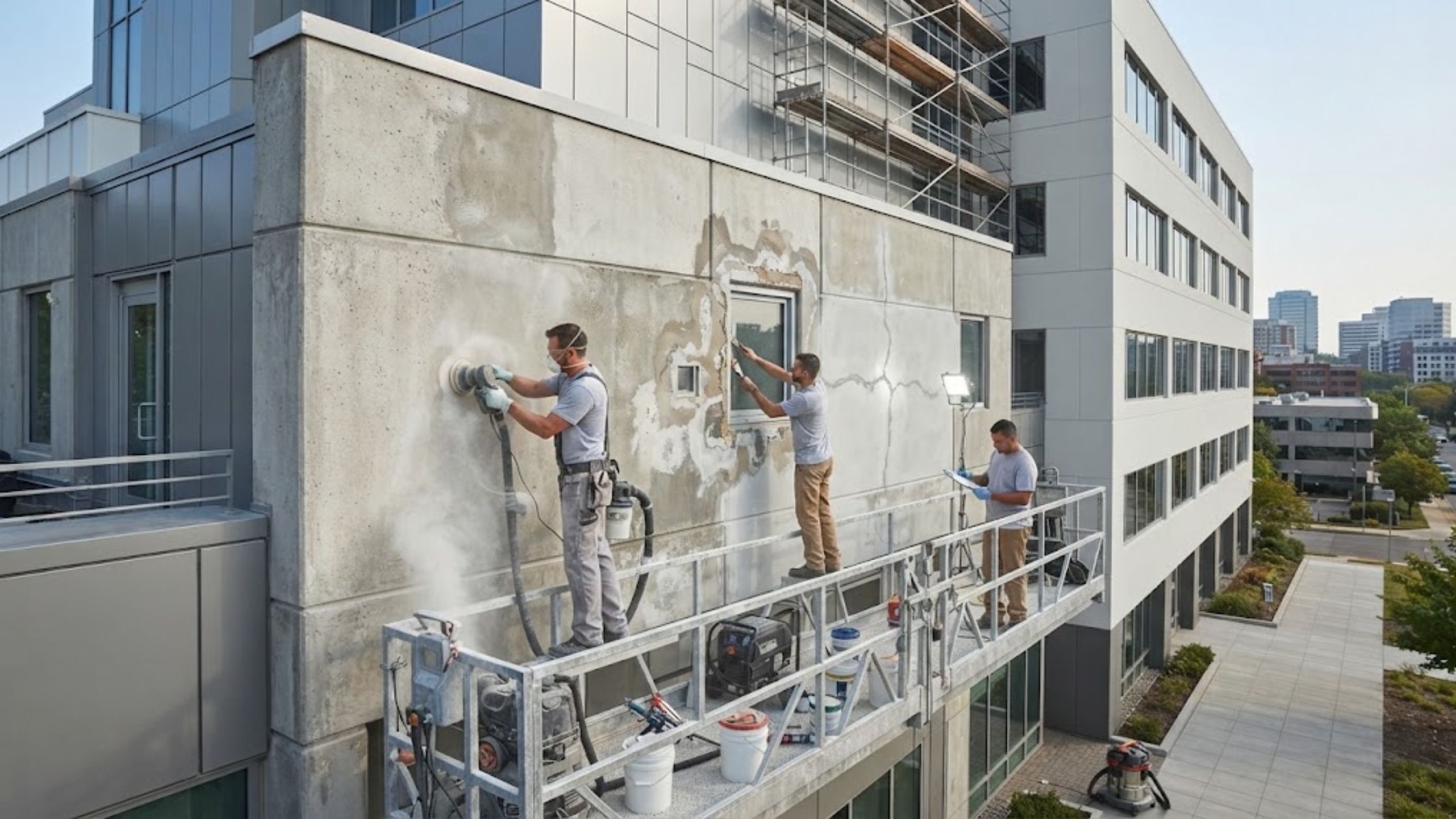 Proper MA Commercial Painting Contractors know that skipping preparation steps is the primary cause of premature paint failure in commercial real estate. When paint is applied over dirt, grease, chalking residue, or peeling layers, the new coating cannot bond properly to the substrate. Over time, environmental stressors such as wind driven rain and extreme temperature fluctuations will cause the paint film to crack, bubble, and peel away. Investing time and expertise into thorough preparation saves property managers thousands of dollars in costly premature maintenance and touch ups down the line. Furthermore, a meticulously prepared surface guarantees a uniform sheen and color consistency that enhances your brand image and welcomes clients with a polished appearance.
Beyond aesthetics, comprehensive preparation safeguards the structural integrity of your building materials against moisture damage, rot, and corrosion. In Massachusetts, fluctuating humidity levels and freeze thaw cycles can wreak havoc on vulnerable wood, concrete, and metal surfaces if they are not adequately sealed and primed. By removing contaminants and repairing structural flaws before coating, professionals prevent moisture from trapping inside the walls where it can foster mold growth and decay. This rigorous approach ensures that your facility remains structurally sound, energy efficient, and visually striking for years to come. When you explore our comprehensive commercial painting solutions, you will see how dedicated preparation transforms commercial properties from the ground up.
What Are the Initial Steps in Assessing a Commercial Property?
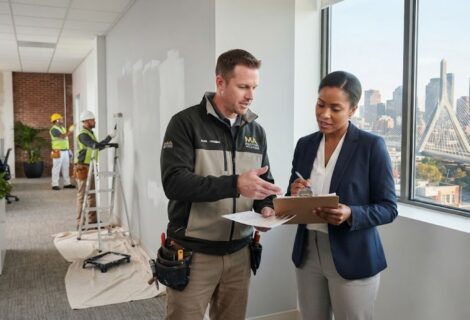
Before any physical labor begins on a commercial facility, experienced painting professionals conduct a thorough visual and structural assessment of the entire building envelope. This initial evaluation helps contractors identify existing damage, substrate types, environmental hazards, and specific architectural nuances that require specialized handling. During this phase, teams check for signs of water intrusion, structural settling, efflorescence on masonry, and rust on structural steel components. Understanding these underlying conditions dictates the exact cleaning methods, repair materials, and primers required to achieve a durable finish.
|
Assessment Phase |
Primary Focus Area | Potential Complications Identified |
| Exterior Envelope | Siding, trim, masonry, windows |
Rot, cracks, mold, caulking failure |
|
Interior Surfaces |
Drywall, plaster, concrete floors | Stains, moisture damage, nail pops |
| Environmental Check | Lead paint, asbestos, high humidity |
Safety hazards, slow drying times |
Once the assessment is complete, project managers develop a customized preparation blueprint tailored to the building’s specific architectural requirements and occupancy schedule. This planning stage minimizes disruptions to daily business operations, ensuring that tenants, employees, and customers experience minimal inconvenience while work is underway. To learn more about our operational philosophies and how we coordinate large scale projects, you can visit our about us team page for additional insights into our experienced professionals. Careful upfront planning guarantees that every phase of the project flows smoothly, keeping timelines on track and budgets fully optimized.
How Do Contractors Clean and Wash Commercial Surfaces?
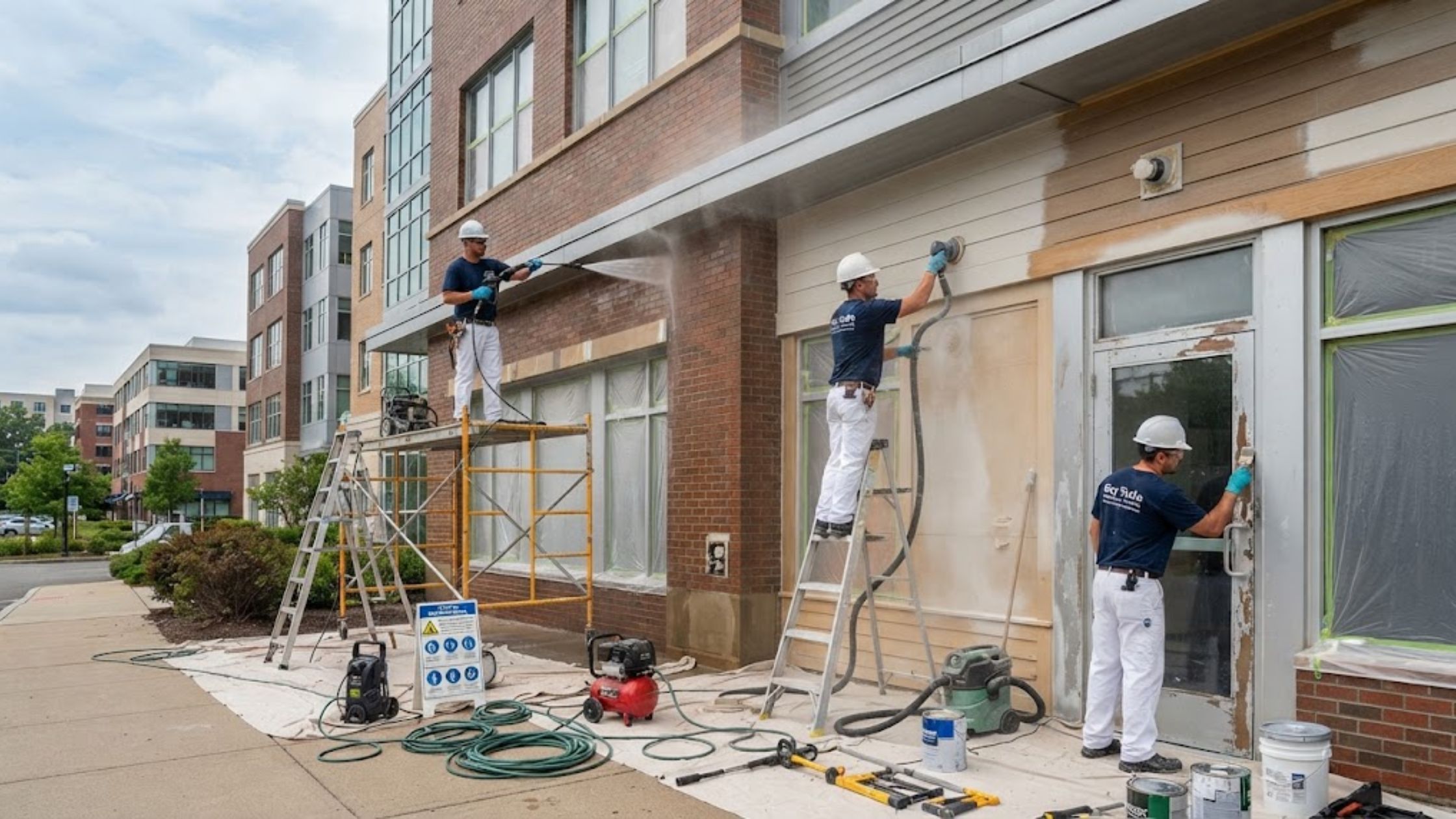
Achieving a pristine finish starts with deep, industrial grade cleaning to eliminate all surface contaminants that could compromise paint adhesion. Exterior facades accumulate atmospheric pollution, dust, pollen, mold, mildew, and salt residue over months and years of exposure to the elements. To tackle these stubborn layers, contractors utilize specialized power washing equipment and eco-friendly cleaning solutions tailored to the specific substrate material. High pressure washing effectively strips away loose debris and organic growth from concrete, brick, and durable metal surfaces without causing structural damage.
However, lower pressure washing techniques or manual scrubbing are required for delicate substrates such as historical wood siding, EIFS, and fragile architectural details. Contractors carefully monitor water pressure and nozzle angles to prevent water from forcing its way into wall cavities, window seals, or electrical fixtures. For interior spaces, cleaning involves washing walls with trisodium phosphate or specialized detergents to remove grease, fingerprints, dust, and industrial residue. A completely clean, dry surface provides the ideal canvas for primers and topcoats, ensuring a smooth, uniform application across every square foot of your building.
How Is Damaged Substrate Repaired Before Painting?
Painting over damaged wood, crumbling concrete, or cracked drywall is like building a house on a sinking foundation; the underlying issues will inevitably resurface. Once cleaning is finished, skilled technicians meticulously inspect every square inch of the building to perform necessary structural and cosmetic repairs. Carpenters replace rotted exterior wood trim, fix warped siding boards, and secure loose fasteners to restore structural stability. On masonry buildings, tuckpointing is performed to repair deteriorating mortar joints and seal gaps that could allow moisture to seep into the interior walls.
Drywall repair is equally critical for interior commercial spaces, involving patching holes, taping seams, sanding uneven patches, and replacing moisture compromised panels. If you want to visualize the dramatic transformation that proper repair and coating work can achieve, take a moment to browse our portfolio showcasing completed projects across various industries. Addressing these imperfections proactively ensures that the final paint coat looks smooth, professional, and uniform under any lighting condition. Skipping these vital repair steps would result in visible flaws that detract from the overall quality of the commercial property.
How Do Professionals Handle Scraping, Sanding, and Feathering?
After structural repairs are completed, contractors focus on removing any remaining failing coatings through comprehensive scraping and sanding techniques. Old paint that has begun to chalk, blister, or peel must be completely eliminated to prevent it from pulling the new paint down with it. Hand scrapers, carbide blades, and power sanders are utilized depending on the scale of the surface and the thickness of the old paint layers. Special care is taken during this phase to feather the edges where old paint meets bare substrate, creating a seamless transition.
|
Surface Type |
Primary Preparation Technique | Recommended Tool |
| Wood Siding | Scraping loose paint & hand sanding |
Carbide scraper & orbital sander |
|
Metal Railings |
Wire brushing & rust removal | Power grinder & steel brush |
| Concrete Walls | Abrasive blasting & etching |
Rotary sander & pressure washer |
Feathering is an essential technique that eliminates hard ridges between painted and unpainted areas, ensuring the new finish lays down completely flat. Once scraping and sanding are finished, crews thoroughly vacuum and dust the entire work area to remove microscopic particles that could cause bumps in the wet paint. This meticulous attention to detail distinguishes amateur work from the exceptional standards maintained by seasoned commercial painting professionals. Every surface is rigorously checked by project supervisors to confirm it meets the strict smoothness and cleanliness criteria required for superior coating performance.
Why Is Priming the Most Critical Step in Commercial Painting?
Many property owners underestimate the importance of primer, viewing it as an unnecessary expense or an optional coat of paint. In reality, primer is a specially formulated bonding agent designed to seal porous surfaces, block stains, and create an unyielding bridge between the substrate and the topcoat. Unprimed drywall will absorb paint unevenly, resulting in patchy sheens and wasted product, while bare metal will rust quickly if exposed to moisture without a rust inhibiting primer. Professional contractors select specific primers based on the substrate material, whether it isalkyd based, acrylic latex, moisture resistant, or bonding primer for glossy surfaces.
|
Primer Type |
Ideal Substrate Application |
Primary Functional Benefit |
|
Bonding Primer |
Glossy surfaces, tile, metal |
Maximizes topcoat adhesion |
|
Stain Blocking Primer |
Water damaged drywall, smoke walls |
Prevents bleed-through of stains |
|
Masonry Primer |
Concrete, stucco, brick |
Seals pores and resists alkalinity |
|
Rust Inhibitive Primer |
Structural steel, iron railings |
Prevents oxidation and corrosion |
Using the correct primer also improves color accuracy, ensuring that your corporate branding colors appear vibrant and true across every wall. For specialized facilities like food processing plants or healthcare centers, antimicrobial primers are applied to inhibit mold and bacterial growth on walls and ceilings. This scientific approach to coating selection guarantees maximum durability and protection against the unique environmental demands of your industry. When you partner with experienced professionals like Wilder Painting, you benefit from expert product recommendations tailored specifically to your facility’s unique operational needs.
How Do Contractors Protect Surrounding Property and Ensure Safety?
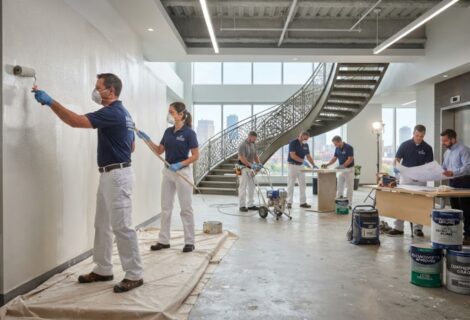
Commercial painting projects often take place in active environments where employees, customers, pedestrians, and valuable inventory are present daily. Protecting surrounding property from accidental paint splatters, overspray, and dust is a top priority for responsible commercial painting contractors. Crews systematically cover floors, furniture, landscaping, windows, hardware, and nearby vehicles using heavy duty drop cloths, plastic sheeting, and professional grade masking tape. Containment barriers and zip walls are frequently erected for interior projects to isolate work zones and maintain indoor air quality for building occupants.
|
Protection Area |
Materials Utilized | Safety Purpose |
| Landscaping & Walkways | Heavy canvas drop cloths & plastic films |
Prevents chemical and paint damage |
|
Windows & Hardware |
Blue painter’s tape & masking paper |
Keeps fixtures clean and functional |
|
Interior Work Zones |
Plastic zip walls & HEPA air scrubbers |
Contains dust and protects occupants |
Safety compliance is strictly enforced throughout the preparation and painting process to protect workers, clients, and property from workplace hazards. Contractors adhere strictly to Occupational Safety and Health Administration regulations regarding scaffolding setup, ladder safety, and hazardous material handling. If lead paint is detected in older commercial buildings, certified abatement procedures are implemented to safely capture and dispose of toxic debris. For personalized inquiries regarding your upcoming property upgrade or to discuss your specific site safety requirements, feel free to reach out to our team through our contact us page for prompt assistance. Comprehensive safety measures and property protection guarantee a stress-free project execution from start to finish.
Frequently Asked Questions
Why do commercial painting contractors spend so much time on surface preparation?
Surface preparation ensures maximum paint adhesion, prevents premature peeling, and protects the underlying building materials from moisture damage and structural decay.
How long does the preparation phase usually take for a commercial building?
The duration depends on the building size, condition, and substrate type, but prep work often accounts for sixty to seventy percent of the total project timeline.
Can painting be done directly over peeling or chalking old paint?
No, applying new paint over compromised coatings will cause the new layer to bubble, crack, and fail prematurely due to a lack of proper bonding.
What happens if rust and mildew are not removed before painting?
Residual mold will continue to grow beneath the new paint film, while rust will expand and break through the coating, ruining the appearance of the metal.
How does Wilder Painting ensure minimal disruption to business operations?
Our team coordinates flexible scheduling, utilizes efficient containment systems, and maintains clean work zones to keep your business running smoothly throughout the project.
Conclusion
Preparing a commercial building for painting is a comprehensive, multi-step engineering process that requires specialized knowledge, professional tools, and meticulous attention to detail. By investing in thorough cleaning, structural repairs, careful sanding, and appropriate priming, property owners protect their real estate investment for years to come. Professional MA Commercial Painting Contractors bring the expertise and discipline needed to navigate complex environmental and structural challenges effortlessly. When executed correctly, this rigorous preparation phase elevates your building’s curb appeal, enhances its structural durability, and projects a professional image to every client who walks through your doors. Wilder Painting is committed to delivering exceptional craftsmanship and meticulous preparation on every project we undertake. Trusting experienced professionals guarantees that your commercial facility receives the high quality care it deserves from the very first day on the job.