How Can You Find Reliable MA Commercial Painting Contractors?
Choosing the right painting partner for your business facility can make the difference between a durable, professional finish and costly operational downtime. When facility managers and business owners ask, “How can you find reliable MA commercial painting contractors?”, the answer lies in conducting methodical research, vetting regional expertise, verifying safety compliance, and inspecting past craftsmanship. In a demanding climate like Massachusetts, hiring established commercial painting contractors MA protects your commercial investment from harsh coastal air, freeze-thaw cycles, and heavy daily foot traffic.
Whether you manage a bustling corporate campus in Boston, a restaurant in Back Bay, or a suburban retail complex, this guide provides a concrete framework to evaluate candidates, compare commercial proposals, and hire a dependable partner.
Why Does Hiring Local Commercial Painters in Massachusetts Matter?
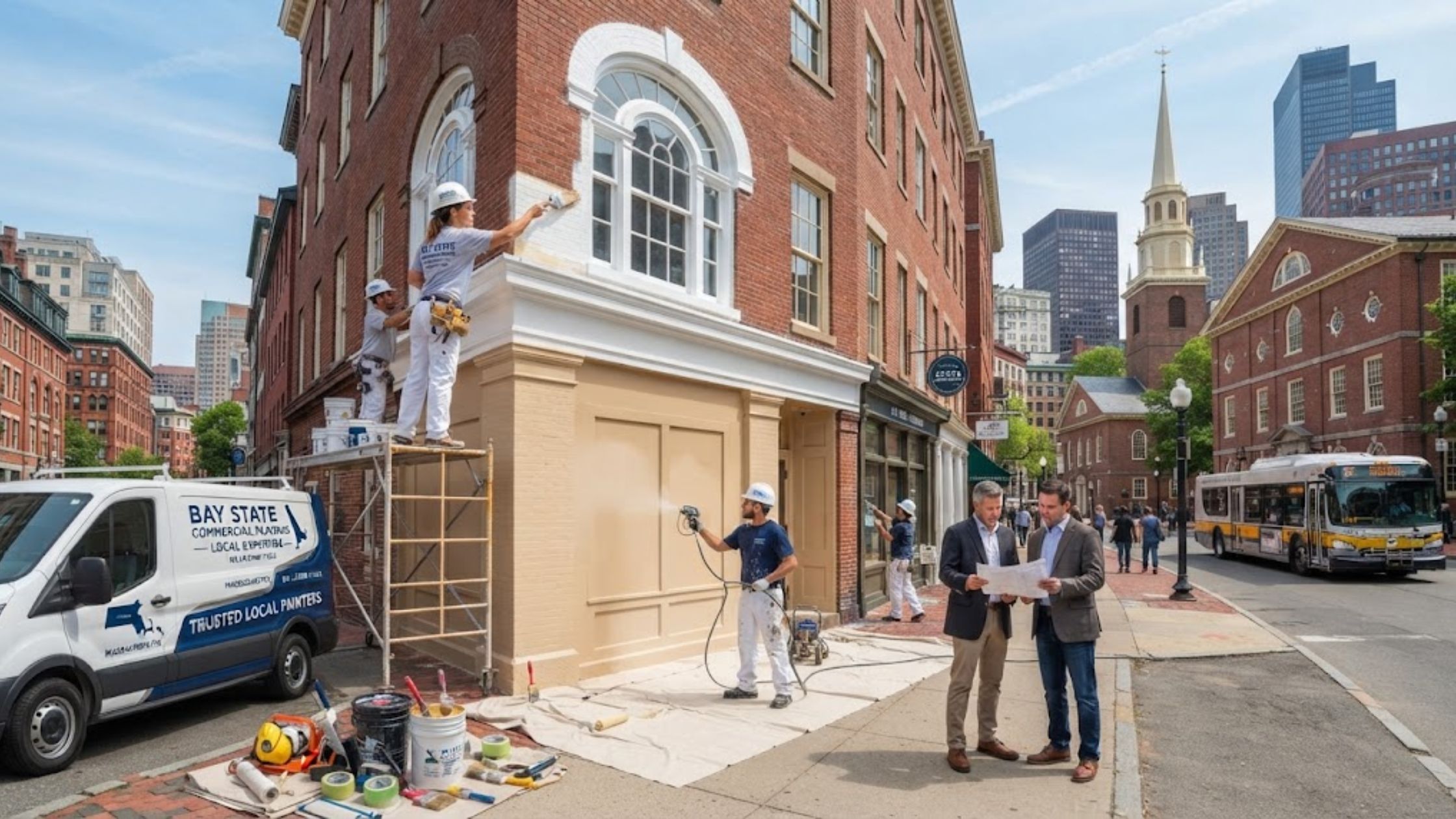 New England properties experience extreme weather variations, from scorching, humid summers to freezing, snow-laden winters. Because commercial buildings face these ongoing environmental stresses, exterior coatings must handle severe substrate expansion and contraction.
Experienced commercial painters Massachusetts businesses trust possess intimate knowledge of local building codes, historic district regulations (such as those in Boston’s historic neighborhoods), and regional environmental shifts. A local team understands which commercial coatings withstand coastal salt mist versus industrial exhaust.
Furthermore, choosing local crews means faster mobilization, reliable accountability, and accessible project oversight. When you need urgent touch-ups or phased evening shifts to avoid disrupting customers, a Massachusetts-based company has the localized staffing required to respond without administrative delays.
What Key Criteria Distinguish Trustworthy Commercial Contractors?
Not every painting company that handles residential repaints has the equipment, logistics, or risk management protocols required for large commercial properties. When evaluating prospective teams, focus on these five non-negotiable standards:
1. Robust Licensing, Insurance, and OSHA Compliance
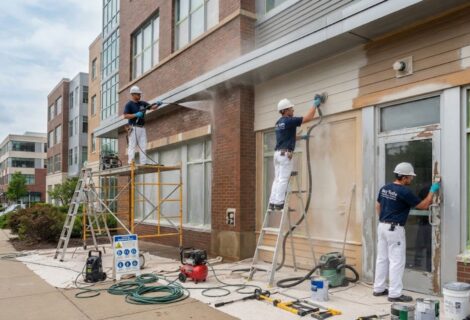
Commercial painting involves heavy equipment, high staging, swing stages, and complex chemical coatings. Never hire an uninsured or underinsured contractor. A qualified commercial painting company MA must carry:
- Comprehensive General Liability: Minimum $2,000,000 to $5,000,000 in coverage.
- Workers’ Compensation Insurance: Covers all on-site personnel against workplace injuries.
- OSHA Certification: Evidence of OSHA-10 or OSHA-30 training for supervisors and crews.
- Lead-Safe Certification: Mandatory when working on older Massachusetts commercial structures built before 1978.
2. Demonstrated Track Record in Diverse Commercial Environments
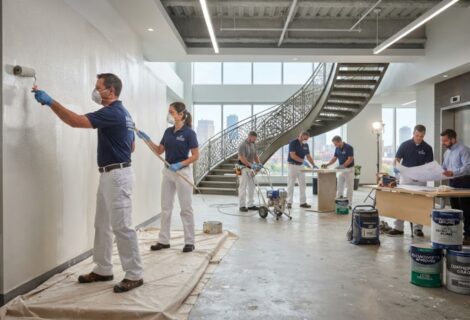
Reviewing a contractor’s completed work reveals whether they can execute your specific scope. Look for documented case studies across office interiors, healthcare clinics, hospitality venues, and retail stores. For example, high-profile commercial projects like Fenway Park or technology fit-outs for Cisco Systems demand strict schedule adherence, background-checked personnel, and pristine execution under tight deadlines.
3. Clear Surface Preparation Standards
Paint failures rarely stem from the paint itself; over 80% of coating issues occur due to inadequate surface prep. A dependable commercial crew prioritizes mechanical abrasion, pressure washing, degreasing, moisture testing, and commercial-grade primers before opening a single finish can.
4. Flexible Scheduling and Off-Hours Operations
Operational disruptions directly affect your bottom line. Reliable contractors offer weekend, overnight, and phased scheduling so that tenant operations, retail sales, or office tasks continue undisturbed.
5. Multi-Disciplinary Capability
Large properties often require specialized services beyond standard wall coatings. If your property includes warehouse elements or heavy machinery, working with a team experienced in industrial painting alongside commercial applications saves you the headache of managing multiple vendors.
Commercial vs. Residential vs. Industrial Painting: What Are the Differences?
Understanding scope complexity helps property owners set realistic budgets and technical expectations. Here is how service levels compare:
|
Criteria |
Commercial Painting | Industrial Painting | Residential Painting |
|
Primary Objective |
Aesthetics, branding, durability, customer experience | Corrosion control, chemical resistance, asset protection |
Home aesthetics, personal comfort, curb appeal |
| Common Substrates | Drywall, structural steel, masonry, commercial stucco | Heavy steel, structural concrete, storage silos, machinery |
Wood siding, drywall, plaster, trim cabinetry |
|
Coating Systems |
Low-VOC scuff-resistant acrylics, epoxies, urethanes | High-build epoxies, polyurethanes, zinc-rich primers |
Latex paints, stains, standard interior/exterior acrylics |
|
Project Execution |
/weekeNightnd phasing, containment, off-hours | Specialized containment, sandblasting, heavy PPE |
Daytime hours, standard masking, drop cloths |
|
Scale & Safety |
Lifts, swing stages, commercial ladders, OSHA monitoring | Fall arrest systems, confined space permits, blast gear |
Standard ladders and light staging |
For facilities combining office spaces and multi-family residential units, contractors who balance commercial scale with fine-finish residential painting expertise provide an added advantage.
How Can You Check Reviews, History, and Project Portfolios?
Before signing a contract, verify that the contractor’s reputation is supported by decades of real-world results rather than aggressive marketing. Follow these actionable verification steps:
Inspect the Portfolio for Project Similarity
Ask for examples of completed jobs that mirror your building’s footprint, substrate materials, and timeline constraints. Reviewing a commercial contractor’s project portfolio gives you tangible proof of line work precision, spray consistency, and containment discipline.
Research Company Longevity and Leadership
Transient painting outfits often pop up in spring and vanish by winter. Companies with sustained local operations maintain consistent relationships with paint manufacturers and commercial property managers. Reading about an established leadership team and background helps confirm stability, long-term leadership, and deep community roots.
Request Direct Client References
Ask the contractor for 2-3 contact references from commercial clients completed within the past 18 months. When you contact these references, ask specific questions: * Did the crew maintain a clean, organized job site? * Were there hidden change orders, or was billing transparent? * Did the crew meet their projected timeline milestones? * How did the team resolve unexpected substrate or moisture issues?
What Questions Should You Ask Before Signing a Commercial Proposal?
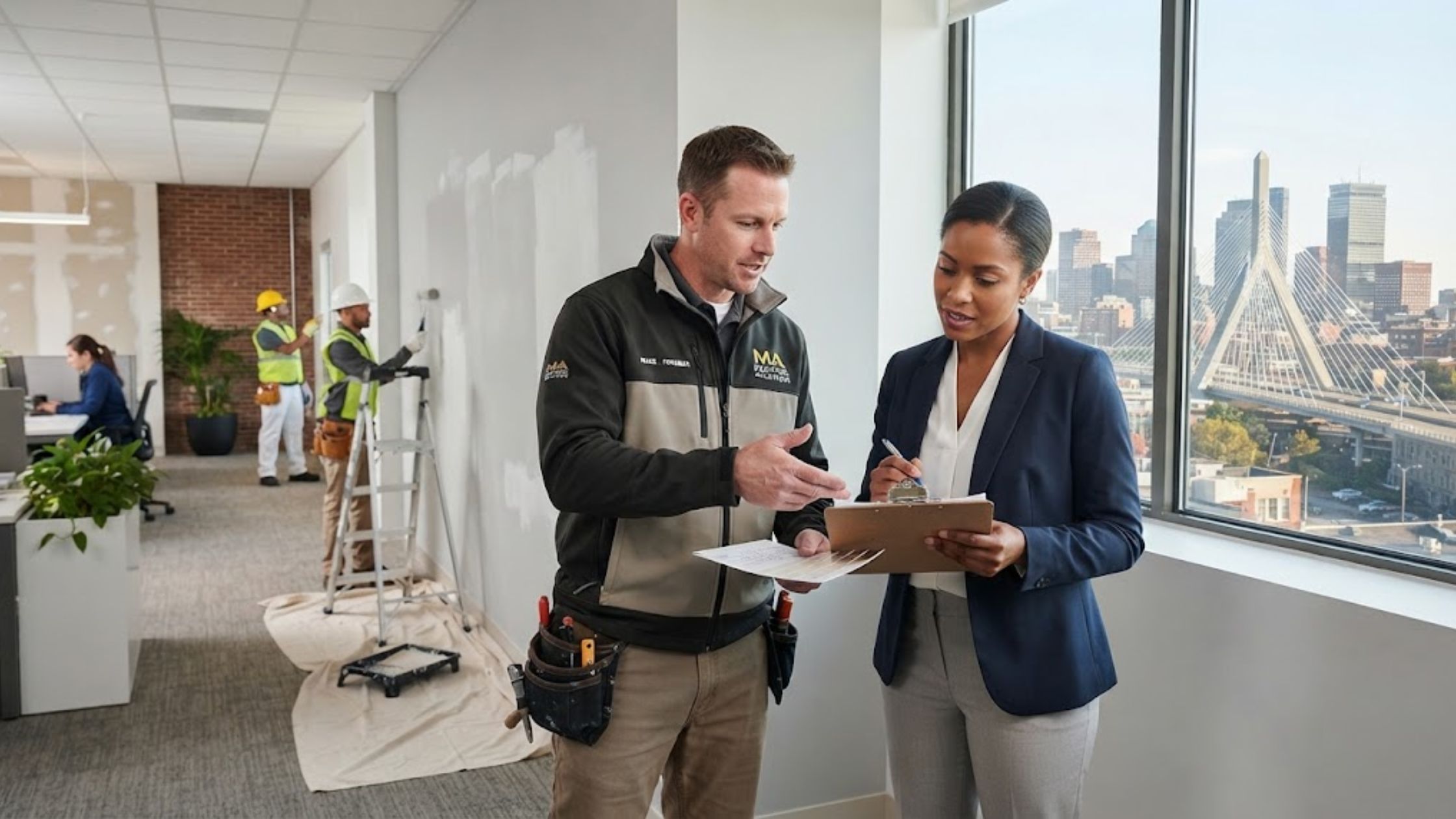
Never accept a one-page, vague estimate. Reliable contractors provide comprehensive, line-item proposals detailing surface prep, brand specifications, film thickness, and cleanup schedules. During walk-throughs, ask these six vital questions:
- Are your painters in-house employees or subcontracted day laborers? In-house crews generally deliver better safety compliance, consistent training, and quality control than third-party subcontracts.
- Which paint brands and product lines will you apply? Commercial properties require high-performance commercial lines (such as Sherwin-Williams ProMar/Scuff-X or Benjamin Moore Ultra Spec) rather than entry-level consumer paints.
- How will you handle containment and daily cleanup? Dust containment, overspray barriers, and daily equipment storage plans are critical to protecting your tenants and assets.
- What does your formal safety protocol look like? Contractors must provide a job-specific safety plan, fall-protection procedures, and SDS (Safety Data Sheets) for all materials on site.
- What is your written warranty on materials and labor? Look for warranties that cover peeling, blistering, and premature flaking for a minimum of 1-3 years.
- What is the protocol if unforeseen structural damage is uncovered? Ensure there is a standardized change-order procedure with written sign-offs before any extra billing occurs.
Common Red Flags to Watch Out For
Protect your facility from substandard workmanship by walking away if an organization shows any of these common warning signs:
- Unusually Low Bids: If one bid is 40% lower than the market average, the contractor is likely cutting corners on surface prep, skipping primer, using lower-grade paint, or working without proper workers’ compensation.
- Demanding Large Upfront Cash Deposits: Reputable commercial painters maintain active trade credit lines with paint manufacturers. They typically bill on progressive milestones or upon substantial completion.
- No Physical Address or Business History: A contractor operating solely out of an unmarked van with no regional business history presents serious warranty enforcement risks.
- Refusal to Provide Certificates of Insurance (COI): A reliable contractor will have their insurance agent email a COI naming your business as an “Additional Insured” before setting foot on your site.
Take the Next Step Toward Transforming Your Commercial Space
Finding a trustworthy painting partner doesn’t have to be a gamble. By vetting licensing, insisting on thorough surface preparation, reviewing verified regional portfolios, and choosing experienced commercial painters, you ensure your building looks exceptional and stays protected for years to come.
If you are planning an upcoming interior or exterior coating project in Eastern Massachusetts or Greater Boston, partner with a team backed by decades of proven craftsmanship. Contact our commercial team today to arrange a detailed site inspection, consultation, and comprehensive proposal for your facility.
Frequently Asked Questions (FAQ)
How much does commercial painting cost per square foot in Massachusetts?
Commercial painting costs in Massachusetts typically range from $1.50 to $4.50 per square foot for basic interior walls, and $2.50 to $6.00+ per square foot for complex exterior surfaces. Final pricing depends on ceiling heights, required surface repairs, accessibility (lifts vs. scaffolding), and specialized coating requirements.
How long does a commercial exterior paint job last in New England?
A professional commercial exterior paint job in Massachusetts typically lasts between 7 to 10 years. Longevity depends heavily on proper surface prep, building exposure to coastal elements, sun exposure, and the quality of primer and topcoats applied.
Can commercial painters work after hours to avoid business downtime?
Yes, dependable commercial painters routinely offer flexible schedules, including evening shifts, overnight work, and weekends. This guarantees that retail businesses, medical facilities, and office environments can operate without interruptions or noise hazards during core business hours.
What prep work should our business do before the painters arrive?
Your contractor will handle heavy protection and masking. However, your team should clear fragile items, back up wall-mounted electronics, secure confidential documents, notify staff and tenants of the schedule, and ensure designated staging areas and parking spaces are available for the crew.